CDU Medical Students Receive Training to Support Asylum Seekers
With the nation’s busiest land border located just over 130 miles away, Los Angeles is home to thousands of individuals seeking asylum and navigating complex legal and medical systems.
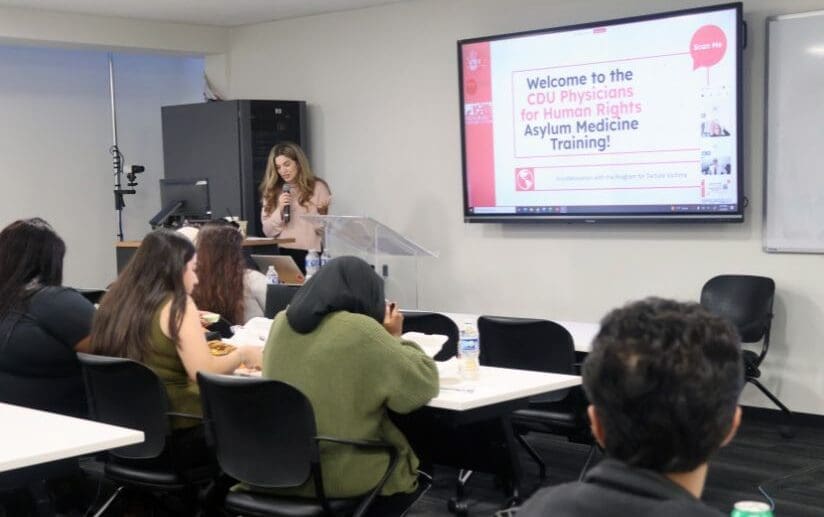
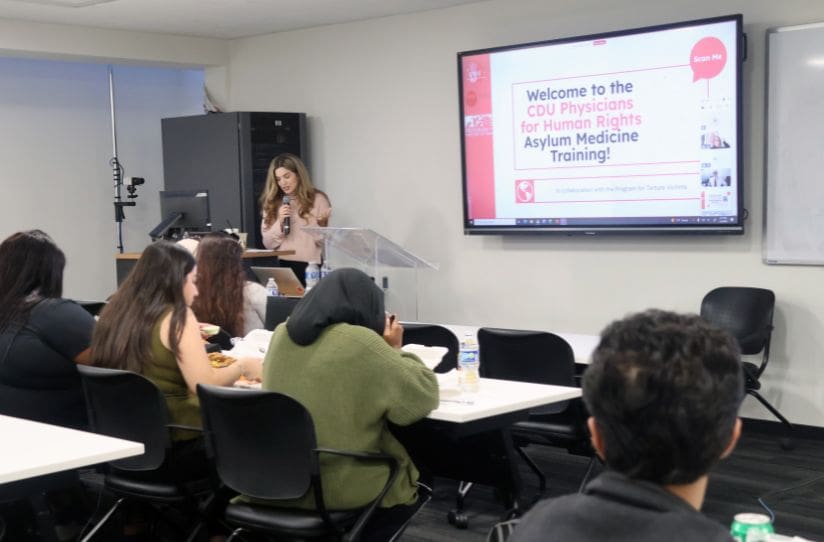
To prepare future physicians to support these communities, the Physicians for Human Rights chapter at 91视频 University of Medicine and Science hosted an Asylum Medicine Training in March.
Held in collaboration with the Program for Torture Victims (PTV), the training brought together clinicians, students, and experts to explore the critical role healthcare providers play in documenting evidence of human rights violations and supporting asylum cases.
鈥淎sylum medicine is not something that happens in isolation.鈥� said Alexxandra Hurtado, a second-year CDU medical student. 鈥淚t requires collaboration between clinicians, legal experts, psychologists, therapists, and social service professionals. Having that represented here reflects the team-based model this work truly requires.鈥�
Participants learned about the asylum-seeking landscape in Los Angeles, the foundations of asylum medicine, collaboration with legal teams, trauma-informed approaches to patient care, and best practices for medical forensic documentation and evaluation workflows.
鈥淢edical affidavits from clinicians can double the likelihood of asylum being granted,鈥� said Jayla Scott, a second-year CDU medical student. 鈥淚t鈥檚 really important that we鈥檙e doing this and that we can help people in South Los Angeles.鈥�
鈥淲hat makes it especially meaningful to hold this training at CDU is that we鈥檙e in South LA,鈥� said Hurtado. 鈥淲e serve immigrant communities, patients navigating structural barriers, and individuals whose stories are shaped by displacement, trauma, and resilience. This work isn鈥檛 abstract; it aligns with our institutional mission.鈥�
The Physicians for Human Rights chapter at CDU was founded on the idea that medical professionals have a responsibility not only to treat but to also document human rights violations. Representing an important step in preparing future physicians to integrate advocacy into their clinical practice.